

Turn daylight into electricity
Your panels generate DC electricity, and an inverter converts it for use in your home. Generation varies with the season, weather and roof conditions.
Generate electricity from daylight and use it in your home. We design your solar PV system around your roof, your routine and your energy goals.
Get a tailored quote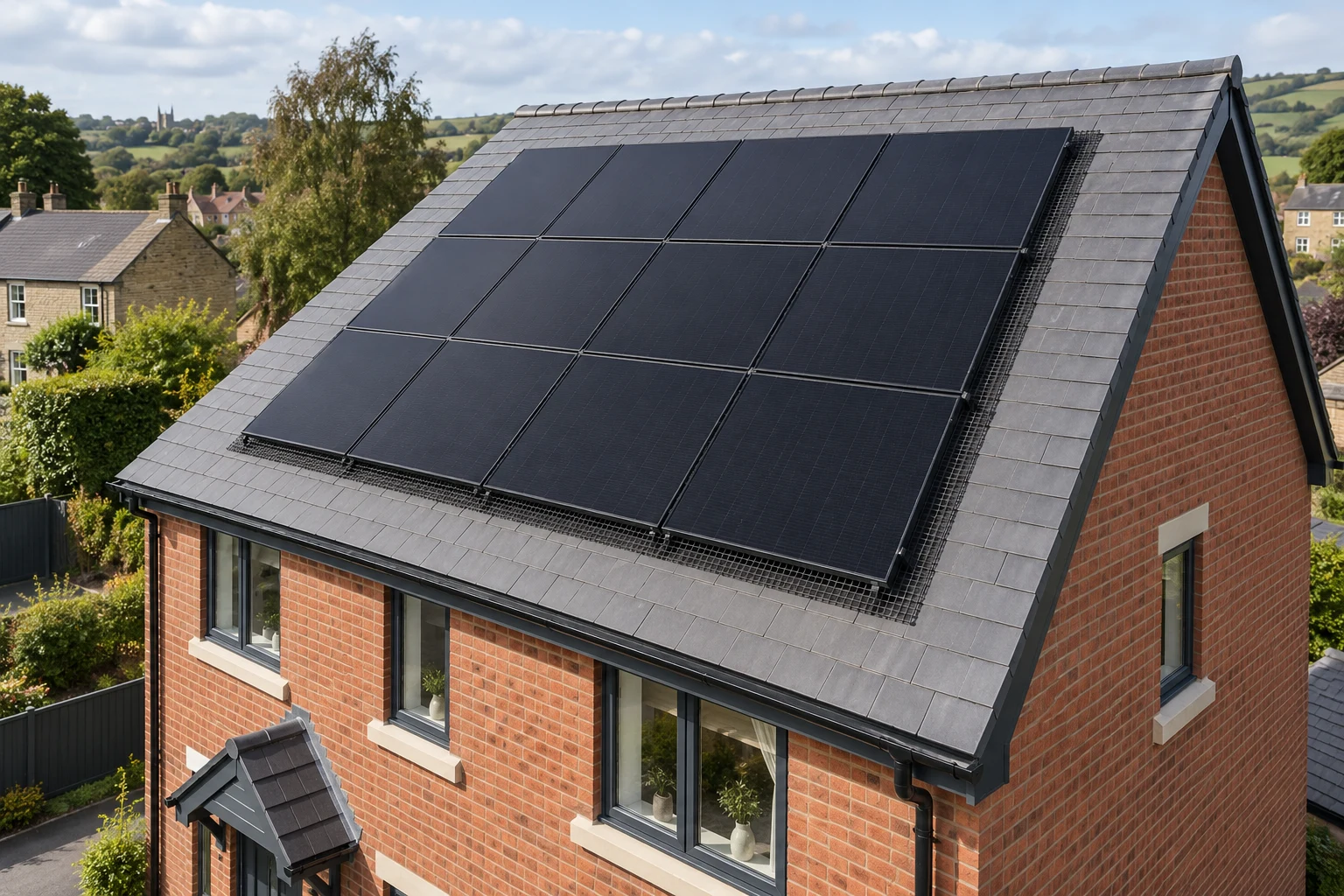
Your panels generate DC electricity, and an inverter converts it for use in your home. Generation varies with the season, weather and roof conditions.
Using your own solar electricity reduces the units you need to buy. Schedule suitable appliances for the daytime to make more use of it.
Add a battery to shift surplus solar into the evening, or export unused energy under an eligible supplier tariff.
We look at roof condition, orientation, shade and usable space, then match the electrical design to your needs. We can consider future EV charging or a battery at the same time.
Talk to our teamYour written proposal confirms the scope, price, equipment and relevant warranties before work starts.
Compare Sunuser’s four main routes, from one focused upgrade to a connected system.
They generate in daylight, including cloudy conditions, but output is lower in poor light. Roof position, shading and the time of year all affect generation.
The price depends on the panel layout, inverter, roof access, scaffolding and any electrical work. We provide a tailored quotation after assessing the installation, with inclusions clearly set out.
Eligible installations in Great Britain can apply for a Smart Export Guarantee tariff. Supplier rates, metering requirements and eligibility conditions vary. We provide the relevant installation paperwork to support your application.
A standard grid-connected solar system shuts down during a power cut. Backup requires compatible equipment and a specifically designed installation.
A useful assessment starts with roof condition, usable area, orientation, pitch and shade. Chimneys, trees and neighbouring buildings can affect the layout. A roof needing repair may be better addressed before panels are installed. Different roof faces can need different design choices.
Use annual electricity consumption in kWh and your daytime routine as the starting point. Panel capacity in kWp describes the array; estimated annual generation in kWh describes expected energy. Neither tells you on its own how much electricity you will use directly at home. Discuss future demand, but compare the cost and forecast for each option.
Your written quotation should identify equipment, mounting, scaffolding, cable routes and electrical work. Access, roof complexity and the existing supply affect cost. Read our step-by-step installation guide and guide to system options and quotation inclusions before comparing proposals.
A battery is an option to assess alongside your usage and tariff. Keep the solar-only forecast so you can see what storage adds. Our battery storage guide explains sizing, with dedicated pages for Tesla, Sigenergy and GoodWe.
We handle the appropriate grid application or notification, commissioning, testing and relevant installation certification for the agreed scope. Your proposal identifies the documentation you will receive, including MCS documentation where applicable and electrical certification.
The G98 or G99 route depends on the complete system and connection arrangements, including existing generation, batteries and any agreed export limitation. We assess these together and obtain any required approval before connection; panel count alone does not determine the route.
Your distribution network operator’s conditions apply. Northern Powergrid provides local connection information.
We assess roof condition, usable space, orientation and shade alongside your electricity bills and future demand. Start with the savings calculator, then let a survey establish the layout.
We agree access, scaffolding and the work schedule beforehand. The team fits the mounting, panels, inverter and wiring, then tests and commissions the installation. We explain any planned electricity interruption, monitoring and handover.
Some installations are permitted development, but conditions and restrictions apply. Listed buildings, protected areas and unusual layouts need particular care. Check the requirements for your property with the local planning authority before work.
We explain the supplied monitoring, equipment warranties and how to contact us. Keep your handover records and report warning messages or unexpected generation changes. Servicing needs depend on the equipment and its condition.
Often, yes. Planning cable routes and inverter choices now can help, but a future battery still needs a compatibility and grid assessment.

MCS certification for solar PV and solar thermal installations.
Registration: NIC-1168
Find Sunuser on MCS ↗
Sunuser’s MCS certification is through NICEIC, which assesses installers against the scheme’s standards.
View installer details ↗
A member of the Renewable Energy Consumer Code, covering the customer journey from advice and quotations to aftercare.
View our RECC membership ↗Tell us about your home. We’ll help you find the right solar and battery setup.