

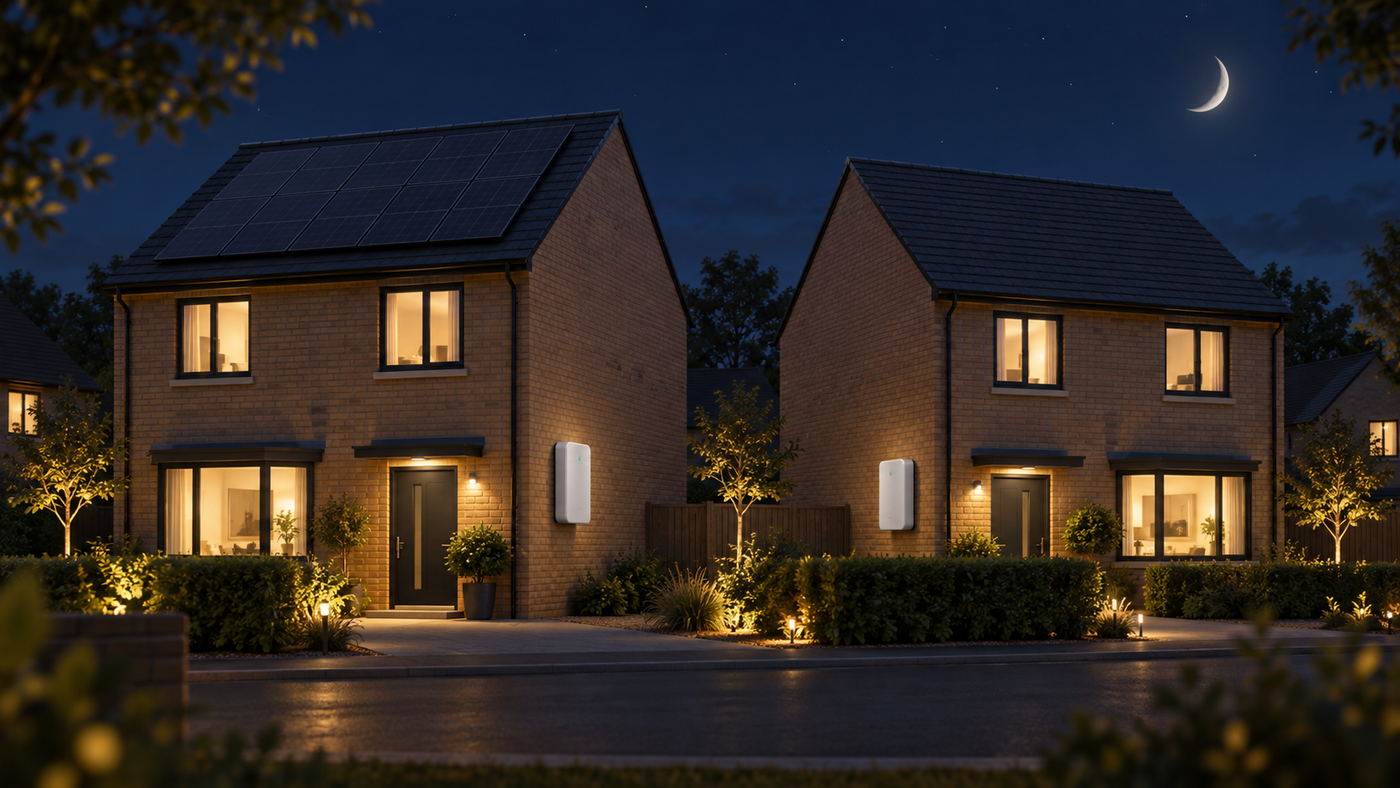
Many Sunuser customers are already using overnight electricity tariffs with a home battery. The idea is straightforward: charge when electricity is cheaper, then use that stored energy when the price rises. And you don’t need solar panels to do it.
Whether you already have solar, are planning an installation or want battery storage on its own, the right combination of battery and tariff can give you more control over when you buy electricity. The starting point is your household’s energy use, rather than the cheapest headline rate.
How overnight battery charging works
A time-of-use tariff charges different electricity prices at different times. Some offer a fixed cheaper overnight window; others have prices that change throughout the day. With a compatible battery configured for grid charging, you can store lower-cost electricity and use it later.
For example, a household could charge overnight and use that energy for breakfast or the evening meal. The battery shifts when electricity is bought; it does not generate electricity. Some energy is lost during charging and discharging, so that needs to be included when comparing costs.
Using a battery without solar panels
A suitable standalone home battery can charge directly from the grid. This makes overnight charging an option to explore even if solar panels aren’t suitable for your roof, or you would prefer to consider them later.
The useful question is how much of your higher-priced electricity use the battery can cover. Its usable capacity, power output and charging speed all matter. If it runs low, or your appliances need more power than it can supply, your home still draws electricity from the grid.
Using overnight tariffs alongside solar
With solar panels, a battery can store surplus daytime generation as well as electricity bought from the grid. Overnight charging can provide a top-up when your expected solar generation will not cover the next day’s needs.
The charging plan should leave room for the solar energy you expect to generate. Filling the battery overnight every day may not be the best approach on a sunny day. Your import rate, export rate and household demand all affect the decision; compatible smart controls can help manage that balance.
What could the difference look like?
Here is an illustration using hypothetical prices, not a current tariff offer or a customer result. Suppose you buy 10 kWh overnight at 10p per kWh. That costs £1. If the battery delivers 90% of that energy back to your home, you have 9 kWh to use.
Buying the same 9 kWh later at 30p per kWh would cost £2.70. In this example, shifting that electricity through the battery reduces its energy cost by £1.70.
That is a saving on the electricity shifted in this example, not a whole-bill saving or a payback forecast. It excludes the purchase and installation cost, battery wear, standby use and any other tariff differences. Standing charges remain payable. Your actual result depends on your rates, equipment and how much stored energy you use.
Choose the tariff and battery together
Compare the full tariff: daytime and peak prices, the overnight window, standing charge and any exit fee. Check eligibility too. Some tariffs require an electric vehicle, solar panels or a particular compatible device. Smart tariffs typically also need a suitable communicating smart meter.
For homes with solar, check how switching affects your export arrangement. A cheap import price alone does not tell you which combination gives the best overall result. Prices and eligibility can change, so confirm the supplier’s current terms before switching.
Many of our customers already use this approach. If you would like to explore it for your home, share a recent electricity bill, your tariff details and any existing solar or battery information with us. We can discuss a suitable system and realistic assumptions, whether you want a standalone battery or storage alongside solar.
Ask Sunuser about a battery for your home
Further reading
Energy Saving Trust: battery storage
Energy Saving Trust: tariffs for renewable technologies